
gnosticism

Unveiling Gnosticism: A Journey Beyond Conventional Faith

Gnosticism represents one of the most fascinating and mystically rich traditions within early Christian thought, yet its complex cosmology and esoteric teachings often render it a perplexing subject for many. At its heart, Gnosticism challenges the conventional narratives of creation and salvation, presenting a dualistic universe where the material world is not a creation of a benevolent God but of a lesser deity, the Demiurge. This exploration aims to shed light on the core tenets of Gnosticism, offering clarity on its worldview, myth of creation, the role of the savior, and the concept of soul ascent.

The Gnostic Cosmos: Dualism and Divine Spark Central to Gnostic belief is the notion of a profound dualism: a distinction between the highest, unknowable God and the flawed material universe crafted by the Demiurge. Unlike the omnipotent God of mainstream Christianity, the Gnostic God is transcendent, residing in the Pleroma, the fullness of the spiritual realm, far removed from the material world. Humanity, according to Gnosticism, bears within a divine spark, a fragment of the true God, trapped in the physical body and the material realm, yearning for return to the Pleroma.
The Soul's Ascent: Escape from the Material Realm The concept of soul ascent is perhaps the most vivid and mystically charged aspect of Gnosticism. It depicts the soul's journey post-death, navigating through the spheres controlled by the archons, towards reintegration with the divine light.
His journey is both a literal and metaphorical representation of the soul's struggle against the forces of ignorance and material entrapment, aiming for the ultimate liberation and unity with the divine.
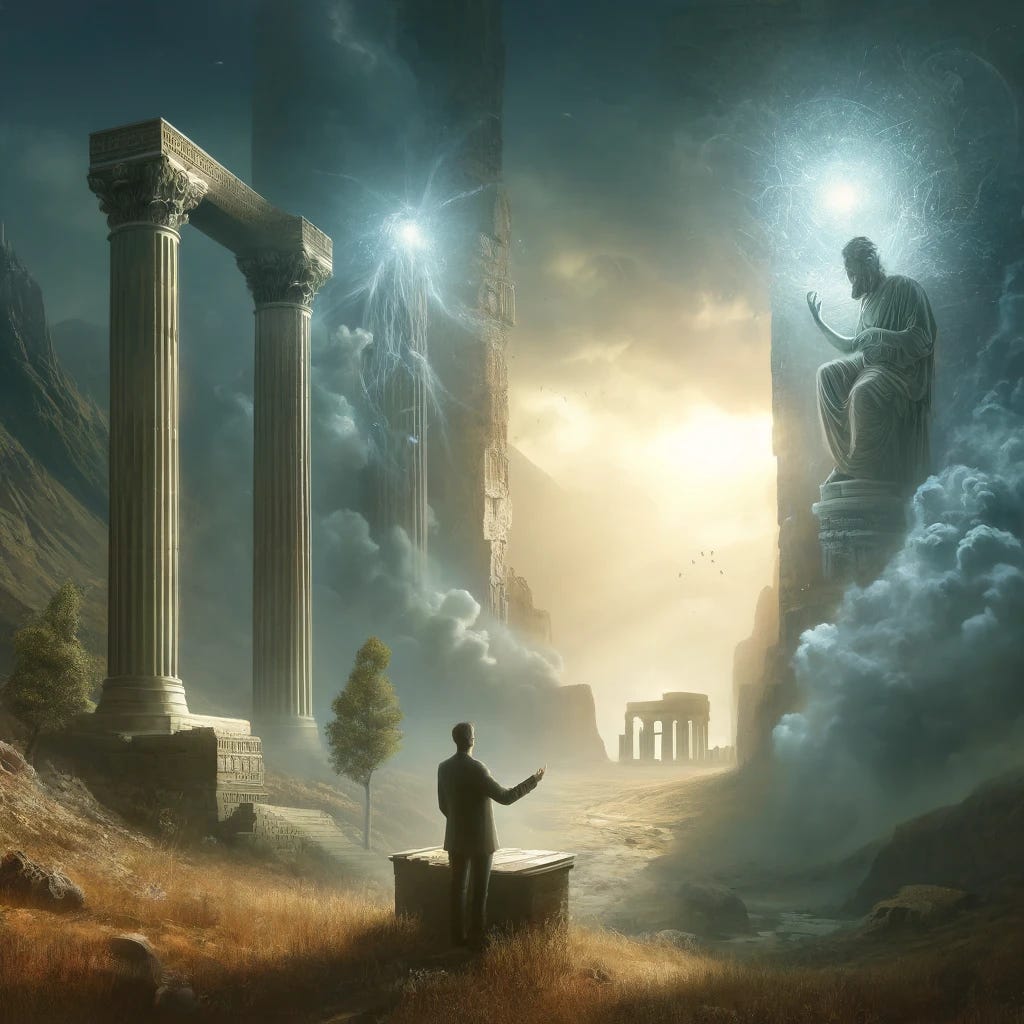
Gnosticism presents a profoundly different perspective on the nature of divinity, creation, and salvation. Its teachings, rich in symbolic imagery and deep metaphysical insights, offer a path not of blind faith but of direct, personal experience of the divine. By exploring the depths of Gnosticism, we not only uncover the diversity of early Christian thought but also encounter a spiritual tradition that speaks to the eternal human quest for meaning, knowledge, and transcendence.
The essence of Gnosticism, with its intricate symbolism and deep metaphysical layers, encourages an engagement with spirituality that transcends mere belief. It calls for an active, introspective search for truth, where knowledge of the divine stems from personal revelation and inner awakening rather than doctrinal adherence. This emphasis on gnosis — direct knowledge of the divine — serves as a guiding light for seekers desiring a connection with something greater than themselves, offering a pathway paved with the insights gained through personal experience and introspection.
Through its rich tapestry of myths and teachings, Gnosticism provides a framework for understanding our existence in a universe that is both magnificent and mysterious. The narrative of Sophia’s fall, the liberating role of the Gnostic savior, and the soul's ascent through the archonic spheres illustrate a cosmic journey from ignorance to enlightenment, from entrapment in the material realm to the liberation of the spirit. These themes resonate deeply with the human condition, reflecting our innate desire to understand our place in the universe and to connect with a transcendent reality beyond the physical.

In delving into Gnosticism, we uncover not just an alternative strand of Christian thought, but a profound spiritual tradition that addresses the timeless human quest for meaning, knowledge, and transcendence. It challenges us to look beyond the surface, to question our perceptions of reality, and to seek the divine spark within ourselves and the universe at large. As we explore the depths of Gnosticism, we are reminded of the enduring power of spiritual inquiry and the endless pursuit of understanding that defines the human experience.
Gnosticism emerges from the early Christian thought as a profound and mystifying current, challenging the mainstream narratives with a universe governed by the Demiurge, a figure distinct from the benevolent deity of orthodoxy. This exploration delves into the rich tapestry of Gnostic beliefs, from its dualistic worldview and cosmology to the significant role of the savior and the soul's ascent toward spiritual transcendence. It invites a closer examination of the divine spark residing within all, offering a pathway to understanding beyond the visible world.
Rooted deeply in the spiritual landscape of the ancient Mediterranean, Gnosticism absorbed influences from various traditions, emerging as a significant yet contentious movement. The discovery of the Nag Hammadi Library significantly expanded our understanding of its texts, revealing a profound dualism at the heart of Gnostic thought. This worldview posits the existence of a divine spark within humanity, trapped in the material realm and yearning for return to the divine fullness, the Pleroma.
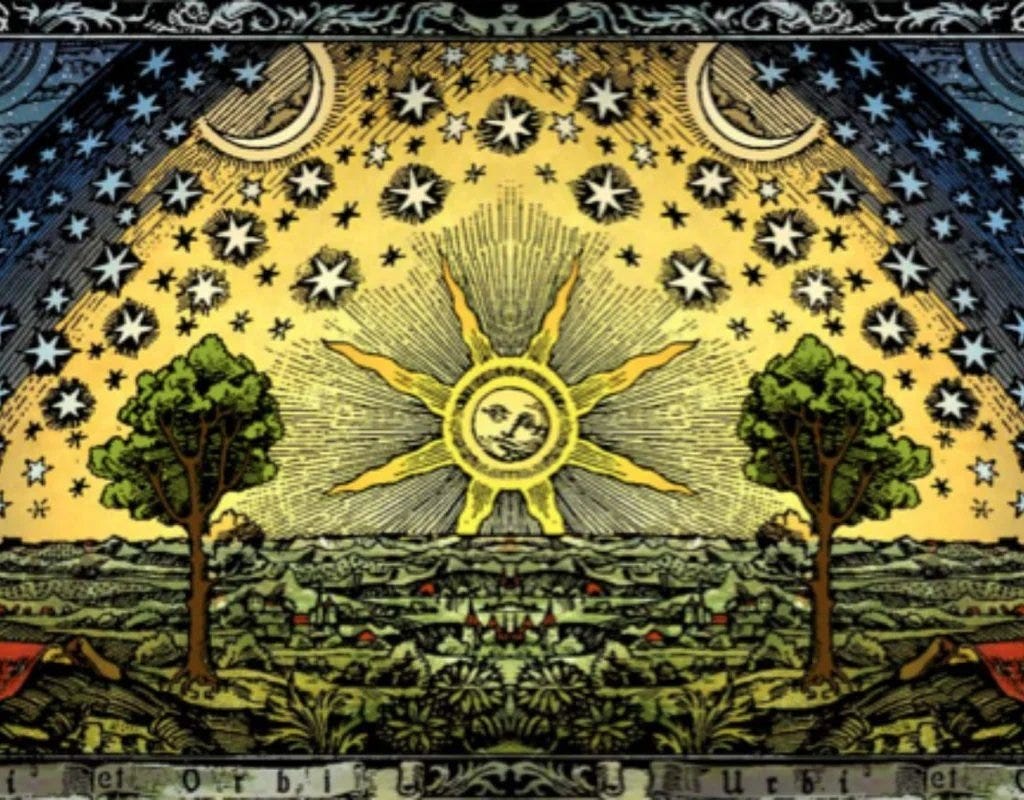
The Pleroma represents the fullness of divine existence, a perfect realm inhabited by aeons and the Supreme Being, contrasting starkly with the flawed material universe created by the Demiurge. This narrative underscores the Gnostic theme of alienation from the divine, necessitating a journey of awakening and return.
The myth of Abraxas, with its unique symbolism merging celestial and earthly elements, encapsulates the Gnostic reconciliation of opposites, presenting a deity that transcends simplistic dualism. Abraxas symbolizes the universe's comprehensive nature, embodying both spiritual and material realms and challenging believers to embrace the complexity of existence.
"Pistis Sophia," a cornerstone of Gnostic literature, narrates the spiritual fall and redemption of its titular figure, encapsulating key themes of the soul's exile and quest for return. This text underscores the importance of gnosis—direct, experiential knowledge of the divine—as the means to transcend the material world's limitations.
The Gnostic Savior diverges from orthodox portrayals, serving not as a figure of atonement but as a harbinger of gnosis, guiding individuals toward enlightenment and liberation from the material realm. This path is depicted as a labyrinth of spiritual trials, designed to illuminate the soul's divine essence and guide it towards unity with the divine.
The soul's ascent represents the journey from material confinement to spiritual liberation, a metaphorical and literal path fraught with obstacles and governed by archons. The ultimate goal is gnosis, a transformative realization of one's true nature and unity with the divine, transcending the material world's dualities and suffering.

Gnosticism emerges from the shadows of history as a profound and mystifying current within early Christian thought, presenting a narrative that veers sharply from the conventional paths of creation and salvation. At its core, it challenges the narratives woven by mainstream Christian theology, introducing a universe marked by stark dualism, governed not by an omnipotent and benevolent deity but by a lesser figure known as the Demiurge. This exploration aims to unravel the complex tapestry of Gnostic beliefs, shedding light on its worldview, creation myth, the nuanced role of the savior, and the profound journey of the soul's ascent. Through this examination, we seek not only to understand the essence of Gnosticism's teachings but also to appreciate its lasting impact on the quest for spiritual knowledge and transcendence. In doing so, we dive into a tradition that, while ancient, speaks to the timeless human endeavor to find meaning beyond the visible world, urging a closer look at the divine spark that resides within us all.
The Foundations of Gnosticism A. Historical Context Gnosticism's roots intertwine with the early days of Christian thought, emerging as a significant yet contentious tradition. It absorbed influences from Jewish, Christian, and pagan beliefs, reflecting the rich tapestry of the ancient Mediterranean's spiritual landscape. The discovery of texts like the Nag Hammadi Library in the 20th century shed new light on its doctrines, providing scholars with vital insights into its complexities and nuances. B. Central Beliefs At the heart of Gnostic thought lies a profound dualism, starkly dividing the spiritual from the material. This worldview posits that the material universe, far from being the creation of a benevolent God, is the work of the Demiurge—a lesser divine being with flawed intentions. Humanity, according to Gnostic belief, carries within it a divine spark, a fragment of the true God, trapped within the physical form and the material realm, yearning for release and return to the divine fullness, the Pleroma. This belief system sets the stage for Gnosticism's distinct cosmology, soteriology, and anthropology, challenging adherents to awaken to the knowledge (gnosis) of their true nature and destiny beyond the physical confines of the world.

The Gnostic Cosmology — The Pleroma: The Fullness of the Divine Realm The concept of the Pleroma is central to understanding Gnostic cosmology. It represents the fullness of divine existence, a realm brimming with spiritual entities and the ultimate source of all light and life. Unlike the material world, the Pleroma is pure, perfect, and inhabited by aeons—divine emanations of the unknowable God. These aeons exist in perfect harmony, embodying various aspects of the divine intellect and creative force, and their interactions reflect the Gnostics' deep fascination with the mysteries of the divine. B. The Creation of the Material World The narrative of the material world's creation starts with a dramatic event: the fall of Sophia, an aeon whose name means wisdom. In an act of overreaching ambition or ignorance, Sophia attempts to conceive without her consort, leading to the creation of the Demiurge, who then crafts the material universe in ignorance of the Pleroma. This universe, marked by imperfection and suffering, stands in stark contrast to the divine realm's perfection. The Demiurge, unaware of the Pleroma's existence, rules this material cosmos, believing himself to be the supreme deity. This tale underscores the Gnostic theme of alienation from the divine, painting the material world as a realm of ignorance and the soul's entrapment, necessitating a journey of awakening and return.
The Myth of Abraxas — Symbolism and Representation Within the enigmatic tapestry of Gnostic mythology, Abraxas stands as a symbol of mystique and power. This figure is often depicted with the head of a rooster, the body of a man, and snakes for legs, a portrayal that merges elements of the earth with celestial symbolism. The rooster signifies watchfulness and the heralding of light, while the serpentine legs represent both wisdom and the chthonic powers of the earth. The imagery associated with Abraxas embodies the Gnostic reconciliation of opposites—spiritual and material, creation and destruction—making him a potent symbol of the universe's comprehensive nature. Furthermore, the numerical value of his name in Greek numerology sums to 365, the number of days in the solar year, symbolizing the full cycle of time and his dominion over the cosmic order. Abraxas’ Role in Gnosticism Abraxas transcends the simplistic dualism of many Gnostic systems, embodying both the highest spiritual realms and the material world's governance. This deity's ambiguous nature challenges the Gnostic believer to look beyond clear-cut distinctions between good and evil, instead embracing the complexity of existence where spirituality and materiality intertwine. Abraxas is seen as a supreme entity who oversees the cosmos, yet his creation and dominion do not stem from the hubris or ignorance attributed to the Demiurge. Instead, his role suggests a more nuanced understanding of the universe, where the divine spark exists within the confines of material reality, governed by a being who encapsulates the totality of all things. Through Abraxas, Gnosticism presents a worldview that acknowledges the profound interconnectedness and the inherent divinity within the cosmos, urging seekers to explore the depths of both light and shadow in their quest for gnosis.
"Pistis Sophia" is a cornerstone within Gnostic literature, offering a detailed narrative of spiritual fall and redemption through the figure of Pistis Sophia herself. The text, rich in allegory and mystical teachings, portrays Pistis Sophia as a divine entity from the higher realms who becomes ensnared in the lower, material world. Her name, combining "faith" (Pistis) and "wisdom" (Sophia), signifies the soul's journey towards enlightenment and return to the divine fullness. This scripture provides not only a narrative of Pistis Sophia's trials and tribulations but also contains dialogues between her and the Savior, who imparts teachings essential for the soul's liberation and ascent. B. Themes and Lessons The story of Pistis Sophia encapsulates key Gnostic themes: the fall from the Pleroma, the struggle against ignorance and cosmic powers, and the eventual redemption through knowledge and divine grace. Her pleas for salvation and the guidance she receives underscore the importance of striving for gnosis—direct, experiential knowledge of the divine—as the means to overcome the limitations imposed by the material world and its rulers. This narrative serves as an allegory for the human condition, depicting the soul's exile from its true home and its longing for return. Through the teachings imparted to Pistis Sophia, the text offers insights into overcoming the obstacles presented by the archons, the importance of repentance and continuous spiritual striving, and the ultimate goal of reuniting with the divine source. The tale of Pistis Sophia resonates as a profound spiritual journey, reflecting the universal quest for meaning, redemption, and the reclaiming of one's inherent divinity amidst the trials of existence.
The Role of the Savior in Gnosticism — Distinction from Orthodox Christian Views In Gnostic tradition, the figure of the Savior diverges markedly from the portrayal found in orthodox Christianity. Here, the Savior is not merely a figure of sacrifice and atonement but a harbinger of gnosis—a profound, revelatory knowledge that empowers individuals to transcend the limitations of the material world and reunite with the divine. Unlike the mainstream Christian emphasis on faith and grace as means to salvation, Gnosticism posits that salvation is achieved through an intimate and personal understanding of the divine mysteries, with the Savior as the guide and illuminator of this hidden knowledge. B. Teachings and Guidance The Gnostic Savior imparts wisdom through teachings and parables, offering insights into the nature of the divine, the cosmos, and the soul's entrapment within the material world. This figure does not promise redemption through belief alone but emphasizes the necessity of an individual's journey towards self-discovery and enlightenment. The teachings often include guidance on navigating the challenges posed by the archons—cosmic rulers who oversee the material realm—and instructions for the soul's ascent through the various spheres of existence. This path is depicted as a labyrinth of spiritual trials, each step designed to shed the soul's attachments to the material and illuminate its divine essence. Through this process, the Savior acts as a beacon, guiding the soul away from the shadows of ignorance and towards the light of gnosis, underscoring the journey's transformative potential for achieving unity with the divine.
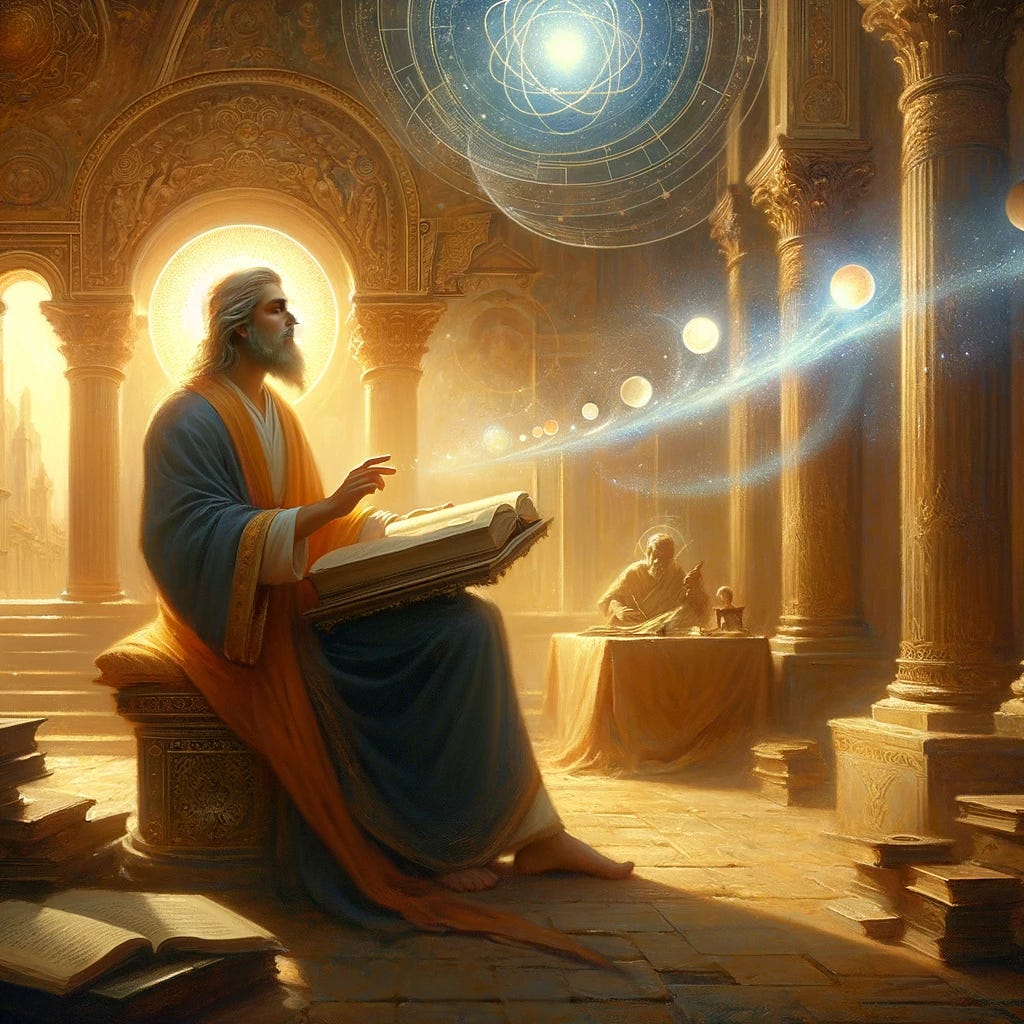
The Soul’s Ascent and Liberation A. The Concept of Soul Ascent In Gnosticism, the soul's ascent is a central motif, representing the journey from the confines of the material world to the spiritual liberation of reuniting with the divine. This ascent is both metaphorical, symbolizing the individual's path to enlightenment, and literal, as depicted in Gnostic texts, where the soul navigates through various celestial realms or spheres governed by archons. Each level of ascent challenges the soul to relinquish aspects of its material bondage, symbolizing the progressive shedding of ignorance and the accumulation of gnosis. This journey is fraught with obstacles, as the archons seek to impede the soul's progress, embodying the spiritual and psychological hurdles humans face in their quest for knowledge and transcendence. Achieving Gnosis The ultimate goal of the soul's ascent is to achieve gnosis—a direct, experiential knowledge of the divine, which liberates the soul from the cycles of rebirth and the limitations of material existence. Gnosis is not merely intellectual understanding but a transformative realization of one's true nature and unity with the divine. This knowledge is deeply personal and cannot be conveyed in words; it must be experienced directly. The path to gnosis requires diligent spiritual practice, introspection, and the guidance of the Savior, who provides the teachings necessary to navigate the journey. Liberation, in the Gnostic sense, is the reintegration of the soul with the divine, a return to the state of original bliss and understanding before the soul's entanglement in the material realm. This liberation is not just the end of physical existence but the soul's awakening to its eternal, divine essence, transcending the dualities and suffering of the material world.
Gnosticism’s Legacy and Influence — Impact on Early Christian Thought Gnosticism, with its profound and esoteric teachings, played a contentious yet influential role in the shaping of early Christian doctrine. Its emphasis on direct, personal experience of the divine and a skepticism towards the material world presented a stark contrast to the emerging orthodox Christian views, which focused on communal worship, faith, and the authority of the Church. The Gnostic challenge prompted early Church fathers to articulate more clearly the tenets of Christian faith, leading to the establishment of creeds and the canonization of the New Testament scriptures. Despite being branded as heretical and facing persecution, Gnostic ideas continued to simmer beneath the surface of Christian thought, influencing mystical traditions within Christianity such as the mystics of the Middle Ages and the contemplative practices of Eastern Orthodox hesychasm. B. Modern Interpretations and Relevance In the modern era, the rediscovery of Gnostic texts and the subsequent scholarly and popular interest in Gnostic spirituality have led to a reevaluation of its place within the history of religious thought. Psychologist Carl Jung saw in Gnosticism a precursor to his own theories of the unconscious, viewing the Gnostic quest for gnosis as akin to the process of individuation and the integration of the shadow. Contemporary spiritual movements, often disillusioned with institutionalized religion, find in Gnosticism an alternative path that emphasizes personal spiritual experience and the quest for inner knowledge. Additionally, Gnosticism's dualistic worldview and its teachings on the divine spark within every individual resonate with the growing ecological consciousness and the quest for a more holistic and integrated understanding of humanity's place in the cosmos. The legacy of Gnosticism, thus, extends far beyond its historical period, offering insights and inspiration for those seeking to navigate the spiritual dilemmas of the modern world
Gnosticism represents one of the most fascinating and mystically rich traditions within early Christian thought, yet its complex cosmology and esoteric teachings often render it a perplexing subject for many. At its heart, Gnosticism challenges the conventional narratives of creation and salvation, presenting a dualistic universe where the material world is not a creation of a benevolent God but of a lesser deity, the Demiurge. This exploration aims to shed light on the core tenets of Gnosticism, offering clarity on its worldview, myth of creation, the role of the savior, and the concept of soul ascent. The Gnostic Cosmos: Dualism and Divine Spark Central to Gnostic belief is the notion of a profound dualism: a distinction between the highest, unknowable God and the flawed material universe crafted by the Demiurge. Unlike the omnipotent God of mainstream Christianity, the Gnostic God is transcendent, residing in the Pleroma, the fullness of the spiritual realm, far removed from the material world. Humanity, according to Gnosticism, bears within a divine spark, a fragment of the true God, trapped in the physical body and the material realm, yearning for return to the Pleroma. The Soul's Ascent: Escape from the Material Realm The concept of soul ascent is perhaps the most vivid and mystically charged aspect of Gnosticism. It depicts the soul's journey post-death, navigating through the spheres controlled by the archons, towards reintegration with the divine light.his journey is both a literal and metaphorical representation of the soul's struggle against the forces of ignorance and material entrapment, aiming for the ultimate liberation and unity with the divine.Gnosticism presents a profoundly different perspective on the nature of divinity, creation, and salvation. Its teachings, rich in symbolic imagery and deep metaphysical insights, offer a path not of blind faith but of direct, personal experience of the divine. By exploring the depths of Gnosticism, we not only uncover the diversity of early Christian thought but also encounter a spiritual tradition that speaks to the eternal human quest for meaning, knowledge, and transcendence.The essence of Gnosticism, with its intricate symbolism and deep metaphysical layers, encourages an engagement with spirituality that transcends mere belief. It calls for an active, introspective search for truth, where knowledge of the divine stems from personal revelation and inner awakening rather than doctrinal adherence. This emphasis on gnosis — direct knowledge of the divine — serves as a guiding light for seekers desiring a connection with something greater than themselves, offering a pathway paved with the insights gained through personal experience and introspection.Through its rich tapestry of myths and teachings, Gnosticism provides a framework for understanding our existence in a universe that is both magnificent and mysterious. The narrative of Sophia’s fall, the liberating role of the Gnostic savior, and the soul's ascent through the archonic spheres illustrate a cosmic journey from ignorance to enlightenment, from entrapment in the material realm to the liberation of the spirit. These themes resonate deeply with the human condition, reflecting our innate desire to understand our place in the universe and to connect with a transcendent reality beyond the physical. In delving into Gnosticism, we uncover not just an alternative strand of Christian thought, but a profound spiritual tradition that addresses the timeless human quest for meaning, knowledge, and transcendence. It challenges us to look beyond the surface, to question our perceptions of reality, and to seek the divine spark within ourselves and the universe at large. As we explore the depths of Gnosticism, we are reminded of the enduring power of spiritual inquiry and the endless pursuit of understanding that defines the human experience. write the next part please GPT IX. Conclusion In our journey through the intricate landscapes of Gnosticism, we've traversed the realms of divine cosmology, explored the profound dualism at its core, and followed the soul's arduous ascent towards enlightenment. Gnosticism, with its rich symbolic language and complex metaphysical constructs, offers more than just an alternative religious narrative; it presents a pathway to understanding the deeper currents of human spirituality and the eternal quest for knowledge and connection with the divine. At its essence, Gnosticism challenges us to seek beyond the tangible, to question the foundations of our beliefs, and to embark on a deeply personal quest for truth. This tradition, ancient yet timeless, does not simply offer answers but encourages a profound engagement with the mysteries of existence. It invites us to consider the presence of the divine within and to recognize the spiritual kinship that binds us to the larger cosmos. As we conclude this exploration, it's clear that the appeal of Gnosticism lies not just in its historical significance but in its capacity to inspire those on a spiritual quest today. It serves as a reminder that the journey towards understanding and connection with the divine is as much about the questions we ask as the answers we find. Gnosticism, with its emphasis on personal revelation and the inner awakening to divine knowledge, continues to offer a beacon of light for seekers navigating the complexities of the spiritual landscape. Thus, as we delve into the depths of Gnosticism, we are not merely uncovering an ancient spiritual tradition; we are engaging with a living stream of thought that continues to influence and inspire. It beckons us to look within, to discover the divine spark that illuminates the path to transcendence and unity with the cosmos. In this quest, Gnosticism stands as a testament to the enduring human desire for meaning, knowledge, and a deeper connection with the ineffable mystery of existence.

Gnosticism emerges from the annals of early Christian thought, challenging traditional narratives with a dualistic universe governed by the Demiurge, a figure distinct from the benevolent deity of mainstream theology. This exploration delves into Gnosticism’s profound beliefs, examining its cosmology, myths, and the significant role of its savior, highlighting a tradition that invites us to discover the divine spark within.
The roots of Gnosticism intertwine with early Christian, Jewish, and pagan beliefs, reflected in rich ancient Mediterranean spiritual traditions. Insights from discoveries like the Nag Hammadi Library reveal Gnosticism's deep dualism, positing a material world created not by a benevolent God but by a flawed Demiurge. This forms the basis for Gnostic cosmology, emphasizing humanity's entrapment in the material realm and the divine spark that seeks return to the Pleroma, the fullness of divine existence.
In Gnostic cosmology, the Pleroma represents a perfect, divine realm, populated by aeons and the unknowable God, in stark contrast to the flawed material world crafted by the Demiurge. The fall of Sophia, an event leading to the creation of the material universe, marks a central narrative of Gnostic thought, highlighting themes of alienation and the need for spiritual awakening.
The myth of Abraxas encapsulates the Gnostic synthesis of spiritual and material realms, portraying a deity that embodies both the divine and the earthly. This figure challenges adherents to transcend simplistic dualism and recognize the complexity of existence, urging a deeper exploration of spiritual and material dimensions.
"Pistis Sophia," a seminal Gnostic text, recounts the trials and spiritual redemption of its namesake, emphasizing the pursuit of gnosis—direct knowledge of the divine—as essential for overcoming material constraints. This narrative mirrors the human quest for redemption and deeper spiritual truth.
Distinctly, the Gnostic savior diverges from orthodox Christian views by not just offering salvation but revealing hidden knowledge essential for spiritual liberation. This savior's teachings assist followers in navigating their soul's ascent through the realms controlled by archons, emphasizing personal enlightenment over doctrinal faith

.
The soul's ascent in Gnosticism is depicted as a metaphoric and literal journey through celestial realms, aiming for gnosis and ultimate liberation from the material cycle. This path involves overcoming spiritual obstacles and gaining a transformative understanding of one’s divine essence.
Gnosticism's lasting influence extends from its challenge to early Christian orthodoxy to modern spiritual and psychological applications, reflecting its relevance in contemporary spiritual discussions. It provides a framework for those seeking a more personal, experiential approach to spirituality, resonating with modern quests for ecological consciousness and holistic living.